Stylish Living Room and TV Backsplash Designs with Decorative Wall Molding Models
When simply changing the color of a blank wall isn't enough, when furniture is pushed against a wall and disappears, or when the TV unit is too plain, wall moldings add order, depth, and character to the space. With the right model, the living room looks more balanced, the area behind the TV becomes a more stylish focal point, and even the hallways begin to speak the same language as the rest of the house.
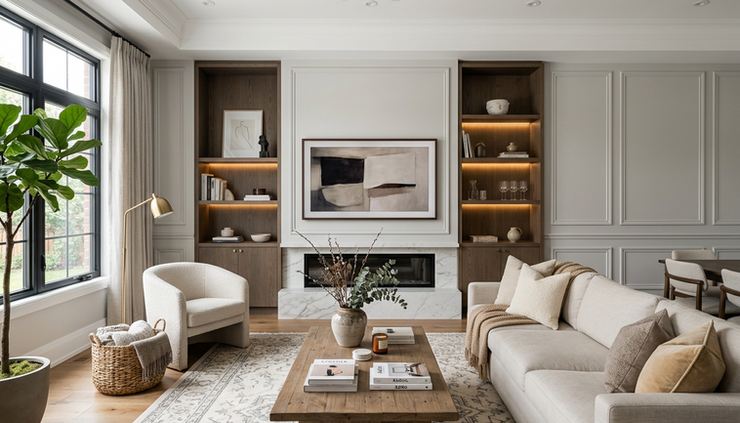
Why is wall molding so popular?
The reason why moldings stand out in wall decoration is not just aesthetic. Moldings add architectural rhythm to flat surfaces. They divide large walls, frame empty spaces, and make the area where furniture is located appear more deliberately designed.
Instead of covering an entire wall, dividing it with thin lines adds a lighter, more dynamic feel to the space. Elegant frames can be used in a classic living room, while in a modern home, simpler, vertical, or geometric lines might be preferred. This flexibility makes molding applications useful for different decorating styles.
Moldings can also balance proportion problems in a room. In a room with a low ceiling, vertical lines can make the ceiling appear higher. In a very long hallway, horizontal or paneled applications can make the wall appear more organized. In prominent areas such as behind a TV, they can bring the design together and create a more cohesive look.
When choosing a molding model for living room walls, it's important to get the proportions right
The living room is one of the most frequently used and visible areas of the house. Therefore, when choosing living room wall moldings, simply deciding based on personal preference is not enough. The width of the wall, ceiling height, seating arrangement, curtain color, lighting, and floor texture should all be considered together.
In large rooms, wide panels, symmetrical frames, and more defined lines can yield good results. In smaller rooms, however, overly thick moldings can make the wall look cluttered. In such spaces, thin profiles, light-colored paint, and a simple arrangement create a more spacious effect.
Classic frame molding applications
The classic frame design creates rectangular or square forms on the wall. It is often used behind a sofa, on a console, or on a dining area wall. The strength of this design is its timeless appearance. When combined with white, off-white, beige, gray, and light gray tones, it creates a calm yet elegant atmosphere.
For a more classic effect, wallpaper, sconces, or paintings can be used within the frames. However, the application should not be too dense. Leaving some panels empty instead of placing decorative objects in each frame looks more balanced.
Vertical slat applications
Vertical lines are a popular choice in modern living rooms. They work particularly well near a TV unit, around a fireplace, or on a single accent wall. Vertical lines create the illusion of a higher ceiling and give the wall a more contemporary look.
In this model, the spacing between the slats is very important. Too close a spacing creates a more dynamic and eye-catching look. Less frequent spacing, on the other hand, creates a simple and elegant effect. A softer result is achieved with lighter tones, while a more dramatic result is obtained with darker tones.
Asymmetric and geometric models
Geometric molding designs are a good alternative for those who want to move away from the classic frame look. A more energetic wall design can be created with triangles, trapezoids, diagonal shapes, and free-form lines. They look striking in teenagers' rooms, entrance areas, or modern living rooms.
In this type of design, the measurement and drawing stages are more precise. Even a slight disproportion can be noticeable. Therefore, it is beneficial to do a preliminary test on the wall with tape before application. If the design created with tape is observed for a few hours, it will be easier to see if the model truly fits the space.
TV backsplash molding designs create a focal point
In living rooms, the wall where the television is located is naturally one of the most frequently looked at surfaces. Therefore, TV backsplash trims serve not only a decorative but also an organizational role. Since the TV, cables, unit, shelves, and lighting are all gathered on the same surface, a well-planned trim application makes the area look more organized.
The most common mistake when using a bezel behind a TV is choosing a design that's so busy it rivals the TV screen. Very dense patterns, contrasting colors, and complex panels can be tiring to watch. Calmer lines generally yield better results.
Vertical lines behind the TV
Vertical slats create a modern and clean look behind the TV. When combined with shades of gray, anthracite, black, dark green, and walnut, they create a strong accent area. In light-colored living rooms, a dark TV backdrop can add depth to the space.
In this model, centering the TV is crucial. If the bezel spacing overlaps with the edges of the screen, the image may appear cluttered. Before installation, the TV dimensions, wall mount, power outlet location, and sound system (if applicable) should all be planned together.
Framed TV walls
Creating a wide frame effect around the TV is a more classic and neat option. Especially when used with a console or low TV unit, the wall appears as a single unit. Different paint tones can be applied within the frame. For example, the entire wall can be a light gray, while the panel where the TV is located can be chosen as a darker shade.
This method creates a decorative effect without using too many items. Instead of filling the wall with shelves, niches, and accessories, a simple accent is created using moldings.
Using wood grain and slats together
In TV backdrop designs, wood panels and slats can be used together. Wood adds warmth, while slats provide linear order. Walnut, oak, or light beech tones easily complement modern furniture.
The key here is to ensure clean transitions between materials. The boundaries between wood panels, paint, and trim should be distinct. Haphazard joints can make an elegant design look amateurish.

In what situations do polyurethane molding strips offer advantages?
Various materials can be used for wall moldings. Wood, MDF, styrofoam, and polyurethane are common options in decoration projects. In recent years, polyurethane moldings have become a popular choice in many homes due to their lightness and decorative versatility.
Polyurethane material is lightweight, easy to cut, and can be produced in various patterns. Both classic ornate profiles and modern plain profiles are available. Therefore, it can adapt to both classic and modern decorations. Furthermore, its lower resistance to moisture compared to wood offers an advantage in certain areas.
Polyurethane wall molding is particularly used in interior spaces such as living rooms, bedrooms, hallways, and entrance halls. It adheres well to smooth surfaces. Its paintable nature also provides design flexibility. When painted the same color as the wall, it appears as an architectural detail. When painted in a different color, it transforms into a more prominent decorative element.
Comparison of polyurethane, MDF, and wood
When choosing materials, appearance alone is not enough. Ease of application, weight, durability, and paint adhesion performance should all be considered together.
Material | Its main feature | Point to note |
Polyurethane | Lightweight, with a wide range of decorative options, and easy to apply. | It requires quality adhesive and a proper painting job. |
MDF | Suitable for clean and modern lines. | Should be used with caution in damp areas. |
Wood | It gives a natural and warm texture. | The work may require bending and maintenance. |
Styrofoam | It is economical and lightweight. | They may be more sensitive to impacts. |
Polyurethane molding offers a practical solution, especially in projects where fine details are required. However, as with any material, surface preparation and workmanship are decisive factors in the result.
How to plan before installing wall molding?
Planning is half the battle for a good molding installation. Before starting the wall molding process, it's necessary to take measurements, draw a model, and account for fixed elements in the room. Sockets, switches, air conditioning, radiators, curtain finishes, and furniture heights all affect the design.
Applying moldings randomly to the wall may seem quick in the short term, but the result is often uneven. For the best look, the molding lines should relate to the furniture. The panels behind the sofa should match the width of the sofa. The lines behind the TV shouldn't divide the screen. The frames on the dining table wall should be aligned with the center of the table.
Details to consider when taking measurements
For a successful implementation, the following steps are helpful:
Measure the exact width and height of the wall.
Take into account baseboards, ceiling moldings, and door frames.
Mark the actual locations of the furniture.
Include power outlets and switches in the design.
Indicate the thickness of the slats in the drawing.
In symmetrical designs, keep the spacing between panels equal.
Even a simple paper sketch before application makes a big difference. Panel boundaries can be traced onto the wall with masking tape for a clearer view. This method makes it easier to understand how the model will look at scale.
The application surface must be clean
For the trim to adhere securely, the surface must be dry, clean, and dust-free. Any peeling paint, moisture marks, or damaged plaster should be repaired first. Otherwise, the trim may not adhere properly or may separate over time.
The cutting points must also be clean. 45-degree cuts are commonly used at corner joints. The smoother these cuts are, the more aesthetically pleasing the joints will look after painting.
Color choice determines the effect of the trim design
The same design can take on a completely different character in different colors. Moldings painted the same color as the wall create a calmer and more architectural effect. Moldings painted in a contrasting color, on the other hand, transform the wall into a strong decorative surface.
Light colors create a sense of spaciousness. White, cream, sand beige, and light gray tones are safe choices for small living rooms. Dark colors give a feeling of depth and luxury. Anthracite, navy blue, dark green, and brown tones look particularly impressive behind the TV or on single accent walls.
When choosing colors, you shouldn't just look at the wall. The floor color, upholstery, curtain shade, and lighting temperature also affect the result. Beige tones will appear warmer under yellow light, while cool white light can make gray tones appear sharper.
Monochromatic or dual-color?
A single-color application is a more elegant and safer option. When the frame and the wall are the same color, shadow effects are created on the surface. This looks particularly stylish with classic frame designs.
Two-tone application is more striking. The molding can be white and the walls a dark color, or vice versa. However, as the contrast increases, workmanship errors become more visible. Therefore, cutting, filling, and painting must be done more carefully.
Using moldings in hallways adds a sense of transition to the home
Hallways are often neglected in most homes. Yet, these areas, extending from the entrance to the living room, play a powerful role in establishing the overall decor of the house. Hallway wall moldings can be used to make narrow and long spaces appear more organized.
In narrow hallways, it's best to avoid overly bulky and thick moldings. Thin frames, half-wall panels, or simple vertical lines create a more balanced look. Molding applications that create a paneling effect on the lower half of the wall can also add a classic and orderly feel to hallways.
Color choices for hallways should generally favor light tones. If natural light is limited, dark colors can make the space feel smaller. However, decorative strip lighting supported by wall sconces, spotlights, or linear lights can make the hallway feel warmer and more inviting.
Which model is more suitable for which space?
There is no single right way to choose a molding model. The best result comes from a model that is compatible with the size of the space and the desired atmosphere.
Space | Suitable frame model | Design effect |
small hall | Thin frame, light color, simple spacing. | Fresh and tidy appearance |
Great hall | Large panels, symmetrical partitions. | A balanced and elegant effect. |
Behind the TV | Vertical lines, simple panel, dark accent color. | Clear focus |
Corridor | Half-mold, thin vertical lines. | More rhythmic transition area |
Dining area | Framed panel, wall sconce supported design. | Stylish and defined section |
This chart provides a starting point for making decisions. However, furniture placement, wall dimensions, and lighting conditions will always influence the final decision.
Lighting enhances the strip design
Trim applications become more visible with lighting, because the effect of the trim largely comes from shadow and depth. Ceiling spotlights, wall sconces, LED strips, and floor lamps can enhance these surfaces.
Using wall sconces in classic frame designs creates an elegant look. Sconces placed in the center of the frame or between two panels can give the wall a hotel room feel. For modern vertical slats, hidden LED lighting is a good option. Especially behind a TV, a low-level warm light creates a comfortable atmosphere for evening use.
When choosing lighting, the light shouldn't shine directly into the eyes. Very bright lights in TV viewing areas can cause reflections. Softer, indirect lighting enhances both the decor and comfort.

Frequent mistakes weaken a good design
Although molding installation seems simple, some small mistakes can have a direct impact. The most common problem is copying a pre-made design without taking wall measurements. A model that looks good in one house may not have the same effect in another house with different dimensions.
Another mistake is using molding on too many walls at once. When every surface of the room is covered with molding, the focus is lost. Often, a single accent wall or two balanced surfaces are sufficient.
Other points to consider are as follows:
Very thick profiles can look heavy in small rooms.
Overly complex patterns can be tiring on the eyes when watching TV.
Sockets and switches can divide the design.
Poorly cuts and open joints will be noticeable after painting.
Glossy paint can make surface imperfections more visible.
Panels that are separate from the furniture can create a cluttered look.
The right spacing is just as important as the right design. Incorporating breathable surfaces in the molding design enhances the overall quality of the design.
Maintenance and cleaning are easy, but the right paint is important
Wall moldings don't require special maintenance for daily use. Dusting and wiping with a slightly damp cloth when necessary is often sufficient. However, paint choice becomes important here. Washable interior paints are more practical, especially in hallways and homes with children.
Matte paints look softer and more elegant, but some stains can be harder to clean. Semi-matte or silky matte paints are more convenient to clean. Very glossy finishes can overemphasize trim lines and look more bold.
Avoid using abrasive sponges during cleaning. This can damage the paint on the edges of thin profiles. Regular dusting prevents dirt from accumulating between the trim strips.
Simple yet deliberate decisions are enough to achieve an elegant result
Wall molding, when used correctly, can change the atmosphere of a home without the need for major renovations. Framed panels can create a classic elegance on the living room wall. Vertical lines behind the TV can establish a modern and calm focal point. In the hallway, thin moldings can make transition areas more refined.
Three key decisions are crucial for a successful outcome: model, size, and color. A balanced design is achieved when a model appropriate to the space is chosen, the slats are correctly aligned, and the colors harmonize with the furniture. In terms of materials, options like polyurethane, MDF, and wood cater to different needs. Planning beforehand, preparing the surface, and paying attention to workmanship determine the quality of the design.
In your home, starting with just one wall is often the best approach. First, choose the focal point, then determine the size and style. With clean lines, the right lighting, and harmonious colors, molding can transform the feel of not just the wall, but the entire space.